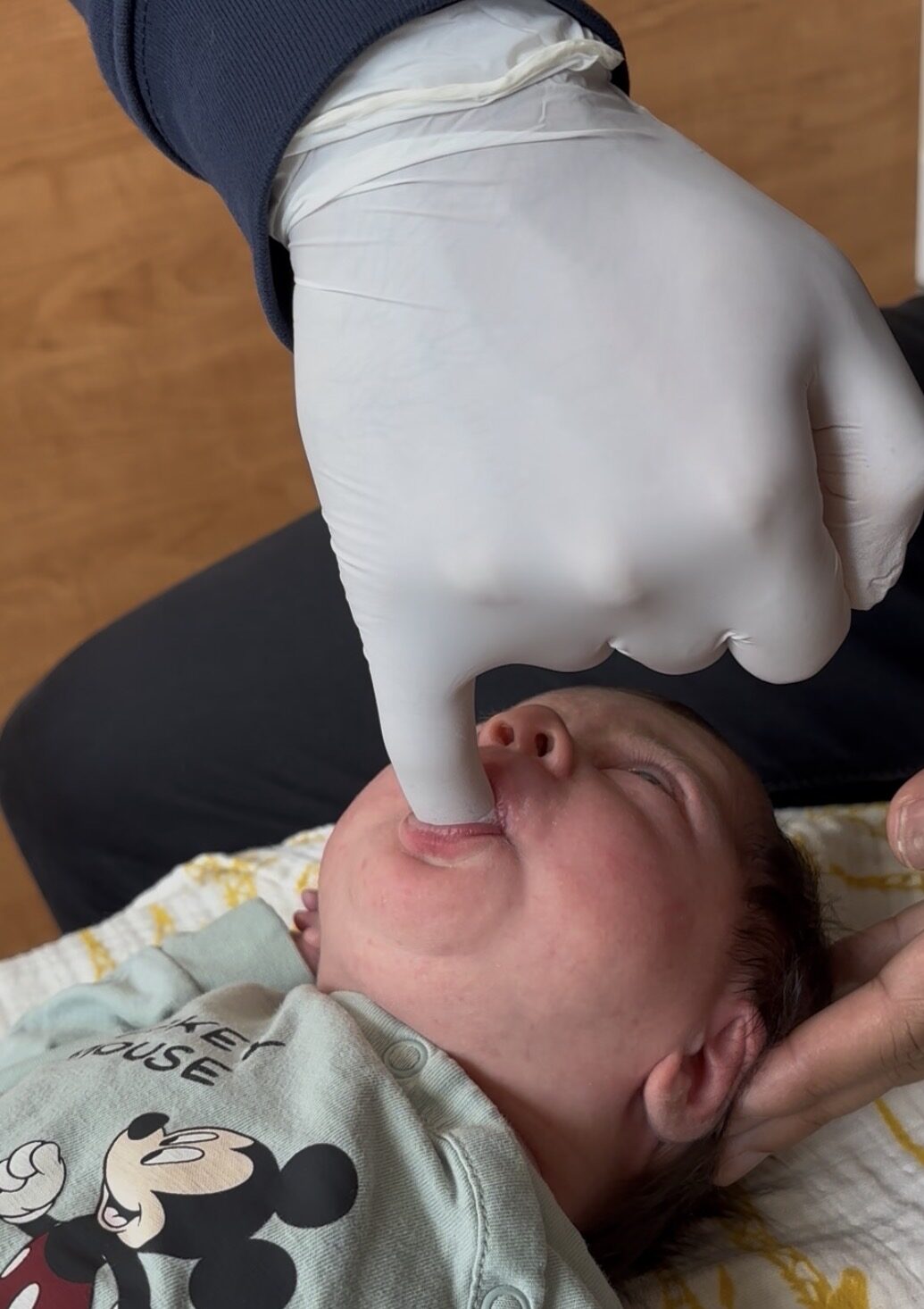
When families hear the words tongue tie, the first thing they often think about is feeding.
Questions like:
- Why is latch difficult?
- Why is feeding uncomfortable?
- Why does my baby seem frustrated during feeds?
These are incredibly common concerns.
But one important piece is often overlooked:
The body matters too.
At The Chiro Culture in East Vancouver, many families come to us seeking support after learning their baby may have a tongue tie. One of the most important conversations we have is helping parents understand that oral function rarely exists in isolation.
Tongue function and body tension are deeply connected.
Understanding that connection can help families approach feeding challenges with a more complete picture.
What Is a Tongue Tie?
A tongue tie occurs when the tissue connecting the tongue to the floor of the mouth restricts tongue movement.
This can affect how the tongue functions during feeding and oral development.
Some babies with tongue ties may experience:
- Difficulty latching
- Clicking during feeds
- Poor seal or suction
- Fatigue during feeding
- Frustration at the breast or bottle
- Increased air intake
- Difficulty transferring milk efficiently
However, not every baby with a tongue tie experiences feeding challenges.
Likewise, not every feeding challenge is caused by a tongue tie.
This is why a thorough assessment is important.
Why Body Tension Matters
The tongue does not work alone.
Feeding is a whole-body process that requires coordination between:
- Jaw movement
- Neck mobility
- Shoulder and chest mobility
- Ribcage movement
- Head positioning
If tension is present throughout the body, it may influence how effectively a baby uses their tongue and oral structures during feeding.
This is one reason some babies continue to struggle even when an oral restriction has been identified.
The Connection Between Tongue Tie and Whole-Body Tension
Many babies with oral restrictions develop compensatory movement patterns.
If tongue mobility is restricted, babies may recruit tension elsewhere in the body to help accomplish feeding.
This can show up as:
Neck Tension
- Difficulty turning comfortably in both directions
- Reduced neck mobility
Jaw Tension
- Clamping
- Chomping
- Shallow latch patterns
Shoulder and Upper Body Tightness
- Restricted positioning during feeds
- Difficulty settling comfortably
Head Preference
- Consistently favoring one side
- Difficulty feeding equally on both sides
Fussiness With Repositioning
- Resistance to certain feeding positions
- Difficulty adapting during feeds
Over time, these patterns can influence overall comfort, movement, and feeding efficiency.
Why Some Babies Still Struggle After a Tongue Tie Release
Families are often surprised when feeding challenges continue after a tongue tie release procedure.
This is because improving tongue mobility is only one piece of the puzzle.
If tension patterns have developed throughout the body, babies may need support learning new movement strategies and movement patterns.
This is where a whole-body assessment can be especially valuable.
At The Chiro Culture in East Vancouver, we often work collaboratively with other healthcare providers to support babies before and after oral function interventions.
What Does a Whole-Body Assessment Look Like?
A gentle pediatric chiropractic assessment looks beyond the mouth.
At The Chiro Culture, we assess:
- Neck mobility
- Jaw movement
- Head preference
- Shoulder and ribcage tension
- Movement symmetry
- Feeding-related positioning patterns
- Overall body comfort and mobility
The goal is to identify whether tension patterns may be contributing to feeding challenges or oral compensation.
Care is always gentle, responsive, and adapted to your baby’s age and comfort.
Why Collaboration Matters
Supporting oral restrictions and feeding challenges often works best as a team approach.
Families may also work with:
- Lactation consultants
- Pediatric dentists
- Oral function specialists
- Feeding therapists
- Midwives
Our role is to help assess and support movement patterns, tension, and body function that may be influencing feeding.
Signs Body Tension May Be Contributing to Feeding Challenges
Parents may notice:
- Feeding is easier on one side
- Baby arches during feeds
- Frequent unlatching
- Difficulty staying organized during feeding
- Clicking or loss of suction
- Preference for one head position
- Fussiness with repositioning
These signs do not automatically mean a tongue tie is present.
However, they may suggest that a whole-body assessment could be helpful.
Our goal is to help families better understand how the body influences feeding and to support greater comfort and ease through gentle pediatric chiropractic care.
When Should You Seek Assessment?
If your baby is experiencing:
- Persistent feeding challenges
- Clicking or poor suction
- Difficulty latching
- Head preference
- Ongoing body tension
A whole-body assessment may help provide clarity and support.
Early awareness often helps families move forward with greater confidence.
Frequently Asked Questions
Does tongue tie always cause feeding problems?
No. Some babies compensate well and experience few challenges, while others may have more noticeable feeding difficulties.
Can body tension affect feeding even without a tongue tie?
Yes. Whole-body tension can influence positioning, coordination, comfort, and feeding efficiency.
Is chiropractic care used instead of tongue tie treatment?
No. Pediatric chiropractic care is part of a collaborative, whole-body support approach and is not a replacement for tongue tie assessment or treatment.
Why assess the body if the concern is oral?
Because feeding depends on coordinated function throughout the entire body. Neck mobility, jaw movement, positioning, and overall body tension can all influence how a baby feeds.