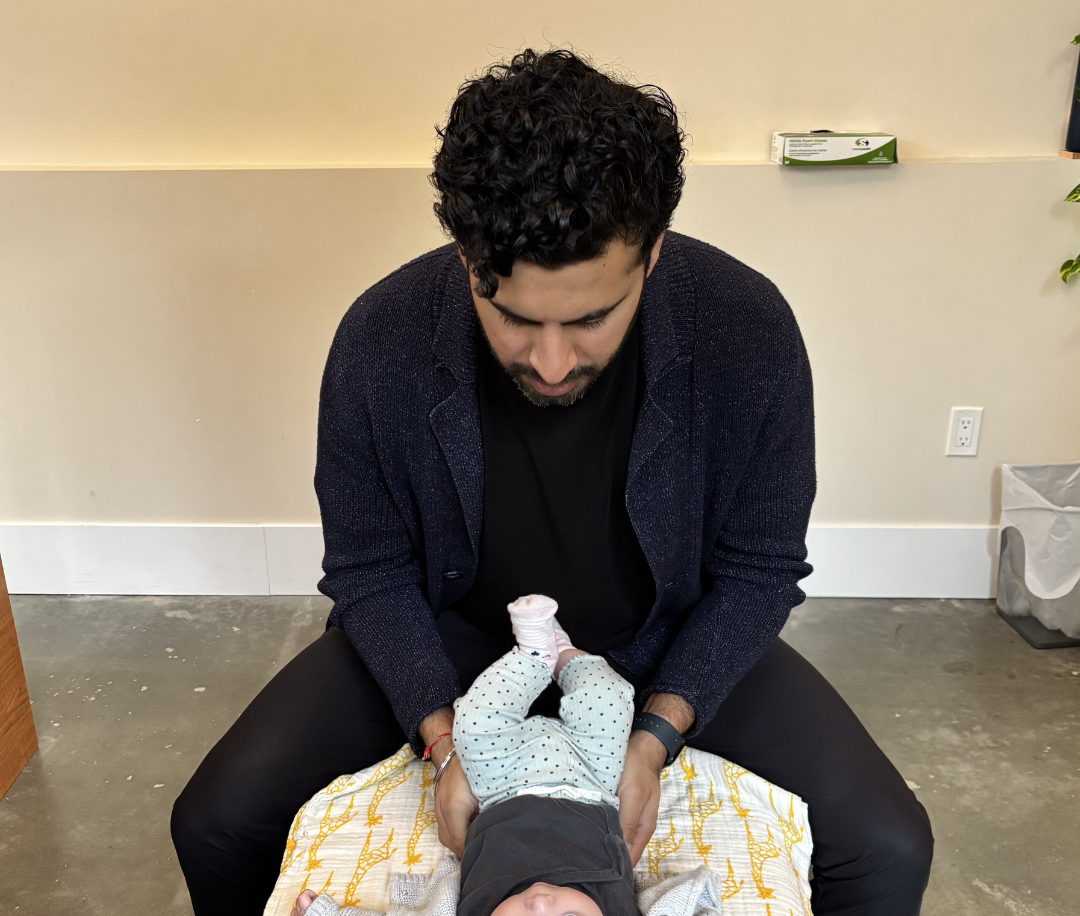
It’s common for parents to notice that their baby seems to prefer turning their head one direction.
Maybe your baby always looks to the same side while resting or feeding feels easier on one side.
Or perhaps tummy time feels noticeably harder when your baby needs to turn in one particular direction.
These can sometimes be early signs of torticollis.
At The Chiro Culture, many families seek pediatric chiropractic care after noticing movement preferences or asymmetries in their baby’s positioning.
Understanding what torticollis is and how gentle assessment may help can give parents clarity and confidence in supporting their baby’s development.
What Is Torticollis?
Torticollis is a condition involving tightness or restriction in the muscles of the neck that can affect a baby’s ability to comfortably turn or position their head equally in both directions.
It often presents as:
- A consistent head-turning preference
- Difficulty turning fully one way
- A slight head tilt
- Resistance during repositioning
- Fussiness when encouraged to look the less preferred direction
Many parents first notice this during:
- Feeding
- Sleep positioning
- Car seat use
- Tummy time
- Playtime
A baby may simply appear to have a “favorite side.”
Why Does Torticollis Develop?
There are several reasons a baby may develop torticollis.
In-Utero Positioning
Babies spend many weeks in a limited space. If positioned in one way for an extended period, tension patterns can develop before birth.
Birth Experience
Birth is physically demanding and certain birth experiences may contribute to tension through the neck, shoulders, and upper body.
Early Positional Habits
If a baby repeatedly rests or feeds in one direction, this preference can become reinforced over time.
Whole-Body Tension Patterns
Sometimes torticollis is part of a larger pattern involving tension throughout the body and this is why whole-body assessment is so important.
What Are the Signs of Torticollis?
Parents often notice signs before receiving a formal assessment.
Common signs include:
Baby prefers looking one direction
- This is often the earliest sign and most noticable
Difficulty feeding on one side
- A baby may resist certain feeding positions because turning one direction feels uncomfortable.
Trouble during tummy time
- If turning or lifting feels restricted, tummy time may feel frustrating.
Head flattening
- When babies repeatedly rest with their head positioned the same way, pressure can create flattening over time.
Unusual movement patterns
You may notice:
- One shoulder appearing tighter
- Difficulty rolling one direction
- Preference for certain positions
Why Early Assessment Matters
The earlier movement patterns are assessed, the easier it often is to support balanced movement.
Babies grow and adapt quickly.
When tension patterns are addressed early, it may help support:
- Easier movement
- More balanced positioning
- Improved comfort
- Better feeding mechanics
- Healthy motor development
Early awareness allows families to support their baby proactively.
How Can Pediatric Chiropractic Help?
A gentle pediatric chiropractic assessment in Vancouver focuses on understanding how your baby’s body is moving as a whole.
At The Chiro Culture, assessment may include:
- Neck mobility
- Head-turning range
- Shoulder and upper body tension
- Movement symmetry
- Positional comfort
- Feeding-related movement patterns
Our goal is to identify whether tension or movement restrictions may be contributing to your baby’s torticollis presentation.
Infant care is always adapted to your baby’s age, comfort, and developmental stage.
A Whole-Body Approach to Torticollis
Torticollis is rarely just about the neck as a baby’s body functions as an integrated system.
Tension through the:
- Shoulders
- Upper back
- Jaw
- Ribcage
- Pelvis
can all influence movement patterns.
Torticollis and Feeding
Many families are surprised to learn there is often a connection between torticollis and feeding challenges.
A baby with neck restriction may:
- Feed better on one side
- Struggle with positioning
- Have difficulty maintaining comfortable alignment
This is why feeding and movement assessments often go hand in hand.
Supporting Babies with Torticollis in East Vancouver
Families seeking support for baby torticollis in Vancouver often benefit from early, gentle assessment.
At The Chiro Culture, we support infants experiencing:
- Head preference
- Torticollis
- Feeding tension
- Movement asymmetries
- Positional discomfort
Our goal is to help create more ease, comfort, and balanced movement as your baby grows and develops.
When Should You Seek Assessment?
If you’ve noticed your baby:
- Prefers turning one direction
- Resists looking the opposite way
- Feeds unevenly
- Struggles during tummy time
- Shows persistent asymmetry
An assessment can help provide clarity and supportive next steps.
Frequently Asked Questions About Baby Torticollis
Can torticollis improve on its own?
Some mild positional preferences may improve, but assessment helps determine whether supportive care may be beneficial.
Is pediatric chiropractic care gentle for torticollis?
Yes. Infant care uses extremely gentle, age-appropriate techniques.
Does torticollis affect feeding?
It can. Neck tension may influence positioning and comfort during feeding.
When should my baby be assessed?
The earlier movement concerns are noticed, the more helpful assessment can be.
To learn more or book an appointment, please call us at 604-428-5156, or schedule via www.thechiroculture.com